There’s a real sense of urgency towards advanced technological adoption in our current fast-paced business environment. This poses challenging new questions effective leaders must face head-on.
Answers to these critical questions will vary. But one thing is for sure – it takes a strategic mind and agile leader to plot and effectively implement a new course for an organisation.
New leadership challenges at the forefront of organisations
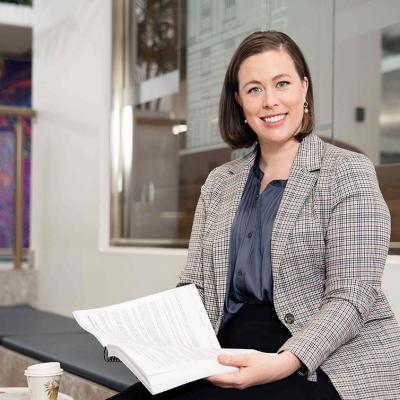
Professor Nicole Hartley says the uptake of generative AI, data integration, automation and robotics accelerated during the pandemic and hasn’t slowed down since.
This, coupled with recent high-profile board overhauls and scandals, has placed corporate Australia under heightened scrutiny and pressure.
"Leadership is under stress and this is only going to increase over time," she says.
"Automation and digitalisation give us transparency and a much sharper focus on ethical behaviours and practices."
Nicole’s research looks at whether boards should have a member who oversees digital responsibility. She shares how this might tie into technological mega-trends.
For now, most companies are approaching these technological trends to gain competitive advantages. But Nicole says the potential for unintended consequences, particularly around data privacy and protection, will become increasingly important.
"I think this is something many companies haven't had the opportunity to strategically embed yet," she says.
"This is particularly true of the end-to-end streamlining of data privacy and the responsible use of data."
Experts like Nicole are looking at how we can use data to:
- help inform better practices
- increase diversity including gender equality practices
- develop human-centred approaches to the increased adoption of advanced technologies.
"All these things are rising to the forefront in boardrooms at the moment."
The importance of agile leadership skills
With the advanced adoption of AI and machine learning into numerous business functions, business leaders have an increasing number of questions they need to address.
These questions include:
- How can we deploy new systems without staff fearing for their jobs?
- Where is our data coming from?
- Are our machines and robots able to integrate this data correctly?
- And how are we not biasing the data that we're giving them?
- Once an operation integrates new technology, what unintended consequences should we consider?
No one person could have the answers to all these questions. But Nicole says adopting a strategic, agile approach allows you to draw on the expertise of others and see the whole chessboard rather than just a few pieces.
What is agile leadership?
An agile lead uses a flexible, collaborative and adaptive approach to increase employee productivity and effectiveness and help organisations navigate complex, highly dynamic business environments.
Preparing leaders to tackle these challenges
A Master of Business Administration (MBA) has long been considered an entry point into high-level leadership positions, finance and consulting roles. But it can also help leaders respond to global challenges and build a rewarding career far beyond working for traditional firms.
Nicole is the Director of Executive Education at UQ, a portfolio of professional development short courses. She says the MBA program equips leaders with the capabilities to navigate these kinds of challenges by instilling a well-informed, strategic and collaborative growth mindset.
"A good MBA is one that gets people to ask questions," she says.
"The MBA experience should not only consist of absorbing knowledge in terms of frameworks or tools. From a leadership perspective, it will also help you ask the right questions of the right people and get into the right conversations. This allows you to learn how to interrogate not only from an inquisitive and curious angle, but from a creative angle and importantly from a moral and ethical angle."
"Responsible leadership and ethical data integration is something we're passionate about instilling in our MBA program."
"The disruptions we are facing are going to be part of a big learning curve for a lot of people in business, particularly for those in leadership roles," says Nicole.
"What we need to do is look at the ways in which AI and robotics can supplement and help workers in their roles. We need to focus on creating an environment where we enable others to tap into their creativity and human ingenuity."
Katrina King had a wealth of experience in the financial services industry before she enrolled in the UQ MBA.
"While my commerce degree gave me fantastic technical skills, particularly in finance, I was also eager to develop strategic leadership skills,” she says.

The UQ MBA gives you the opportunity to deeply reflect on your personal leadership style and hone that in a genuine way. This gave me the confidence to embrace a leadership style that is my own and has definitely made me a better leader.
As the general manager (capital solutions) at QIC, Katrina found the MBA helped her develop a leadership style and the business capabilities required to lead teams through change.
“My technical knowledge combined with what I learned during the UQ MBA means that I can now lead a team of experts to get even better outcomes. The MBA gave me the tools to analyse and solve problems as well as the ability to articulate solutions in a compelling way for boards or executive groups."
Recognising the value of human connection
Combined with a strong networking component with peers from a diverse range of industries and backgrounds, the UQ MBA challenges single-minded approaches to leadership. Instead, it prepares graduates to succeed in the face of rapid change and technological advancement.
After completing the UQ MBA, Chris Hurn became the general manager of a game-changing company providing crucial IT services to the healthcare industry. He believes what made his MBA experience was the people – both staff and students.
“The great thing about the teachers in the UQ MBA program is they all have industry experience," says Chris.
"It was all about how you can take this knowledge and apply it into your company, into your career, into your industry.”
“I really enjoyed my class experience. I was surrounded by people doing exciting, interesting things. My classmates all brought different experience and perspectives to the table with incredible passion."

The UQ MBA not only prepared me for unprecedented challenges. It also gave me the confidence to know I can lead people through change.
Discover how the UQ MBA can help you develop the leadership capabilities to successfully navigate uncertainty and change.
Previously published in In The Black and Business News Australia