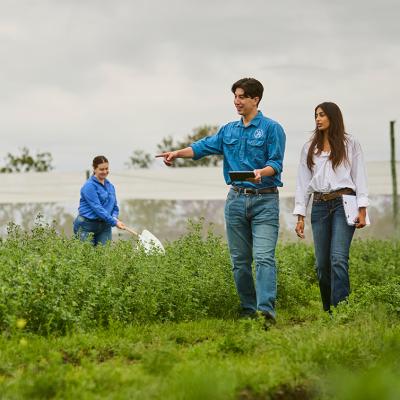
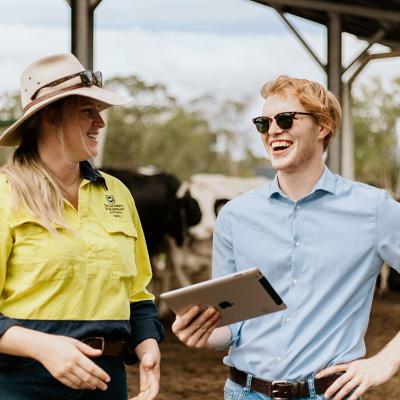
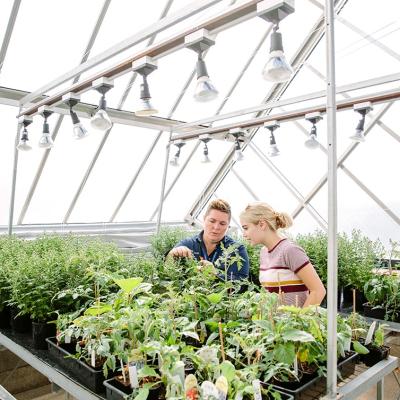
Modern agriculture is an exciting industry, with many opportunities to develop and integrate new technologies into farming practices.
Careers in agricultural science involve solving some of the world’s most pressing issues, such as improving food security and mitigating the increasing impacts of climate change.
With a degree from UQ, you’ll graduate with the skills, knowledge, and confidence to forge a successful career in agricultural science. You’ll enter the workforce with a qualification from the number one ranked university in Australia for agriculture.
So, if you’re interested in a fulfilling and exciting job in this field, keep reading to find out more about agricultural science career opportunities.
An advancing industry
The ever-increasing human population demands healthier and safer food, feed, fibre and fuel, and urgent solutions are required to address environmental degradation and the impacts of climate change. Agricultural careers in science, in particular, appear to be stable for the future, as we're constantly seeking skilled professionals to address these pressing challenges.
According to Your Career, future demand for agricultural scientists in Australia remains moderate while the outlook for agricultural engineers is strong.
Agricultural science jobs: where you'll be working
A career in agricultural science can involve working at multiple scales, including:
- individual farms and small, local companies
- governments, NGOs, and inter-governmental agencies such as the UN Food and Agriculture Organisation
- major multinational companies.
You can take several exciting pathways with your qualification in agricultural science. We’ve collated a few examples of the career options available to our graduates in this field.

UQ students studying agriculture, plant and veterinary sciences learn at our rural campus in Gatton.
Agricultural scientist
Agricultural scientists can find employment in a variety of settings, including government at every level, the private sector, and non-profit organisations. As a qualified agricultural scientist, you’ll have the opportunity to work in a diverse array of roles, from research and advisory roles, to administration, marketing, and media roles.
What does an agricultural scientist do?
Your main responsibilities will include:
- the collection and analysis of data and samples of produce, feed, and soil, and studying other factors affecting production
- advising farmers and farm managers on ways to improve their crop production and livestock techniques
- studying environmental factors affecting commercial crop production, pasture growth and animal breeding, and the growth and health of forest trees.
Agricultural scientist skills
Some of the skills you’ll need to possess as an agricultural scientist include:
- strong problem-solving skills
- an interest in science, agriculture, and the environment
- organisation and supervisory skills
- the ability to clearly communicate, both verbally and written
- strong teamwork skills.
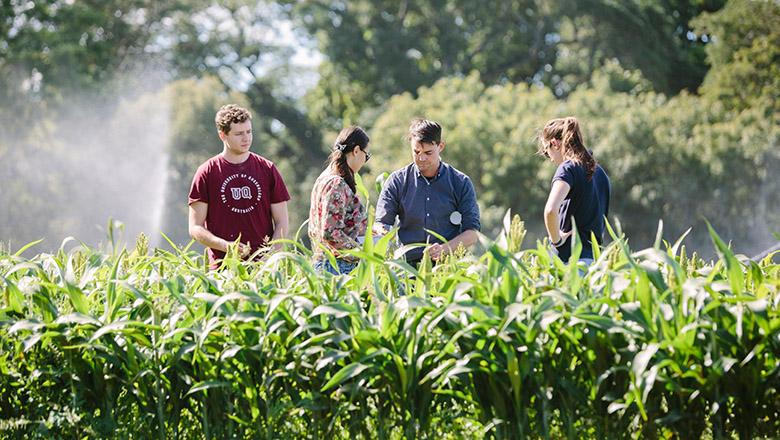
UQ's Bachelor of Agricultural Science includes 120 hours of industry placement.
Agronomist
As the impacts of climate change take hold, agronomy is an increasingly important field in high demand for experts with a passion for improving the use of plants for food, feed, fibre, and fuel. The best way to describe agronomy is the science of plants and soils, where your main role is to develop innovative farm practices and technologies to boost crop yields and farming profits.
What does an agronomist do?
In this career, you can expect to work closely with farmers and local companies as an educator and adviser, providing recommendations for methods and tools to grow crops sustainably and profitably.
Your main responsibilities will include:
- examining crops for signs of disease and insect, weed or pest problems, or any issues with the soil
- working with farmers to conduct trials and ensure the best possible quality crop yields
- presenting findings of trials to farmers and implementing efficient farming practices (such as water efficiency and soil nutrition) as informed by your research
- evaluating crop and soil data to find ways to improve crop quality and productivity while reducing environmental impacts.
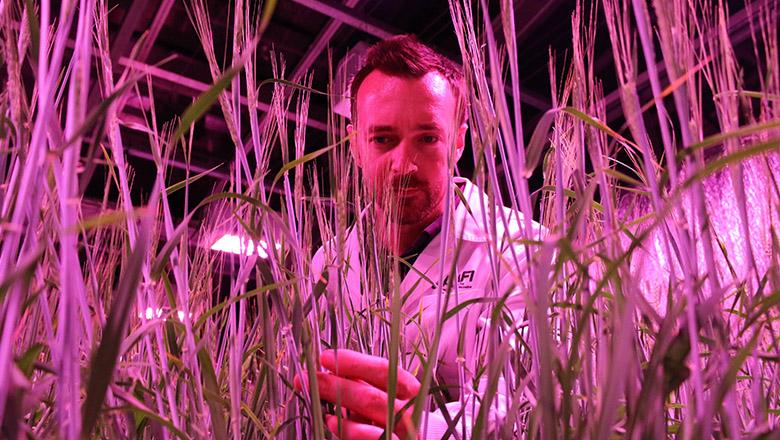
UQ Gatton campus is home to crop and grazing units, horticultural fields, greenhouses, post-harvest facilities and research laboratories.
Agricultural researcher
It’s a booming time for agricultural science research, with an increasing demand for innovative solutions to issues that affect people around the world. As a qualified agricultural scientist researcher, you’ll contribute meaningfully to an industry that makes a genuine difference by developing research that proposes and implements game-changing, innovative, and future-focused solutions.
Read more about the current advances in agricultural science happening at UQ, for a glimpse of what you can do as a researcher in this field:
- Rapid testing to tackle chemical resistance in Australian cattle ticks
- The weed-smart rice system changing livelihoods
- Why mangoes fall before they're ripe – and how science is helping them hang on
Study agricultural science at UQ
Agricultural science is a growing field with opportunities for anyone interested in the production of food, feed, fibre, and fuel, and sustainable land management practices. It’s perfect for anyone with an inquisitive, scientific mind, who is comfortable with problem solving, data analysis, and exploring real-life biological and ecological interactions.
If you’re interested in pursuing a career in agricultural science, be sure to make UQ your university of choice for study. We offer both undergraduate and postgraduate agricultural science programs from our beautiful Gatton campus, where you’ll have access to world-class facilities and lecturers who are experts in their field.
Explore the Bachelor of Agricultural Science Explore the Master of Agricultural Science
Looking for more career inspiration in agriculture and animal sciences? Discover your career options.