Thinking about a career change into healthcare? Or are you already in the industry and considering other types of jobs in the healthcare field?
Any kind of career change can seem a little intimidating, but stepping into a brand-new industry can feel especially overwhelming. The good news is that switching into a healthcare career isn’t impossible – and UQ has countless alumni who are proof of this.
We caught up with two UQ Master of Public Health alumni, Ishita Nair and Daniel Pietrini Sanchez, to learn how they’ve successfully transitioned from their prior work into public health careers – and to get their top tips for others looking to take the leap.
Using their input, we’ve broken this down into a few key steps:
- Identify your ideal career within the medical field
- Understand when and why you’re making this transition
- Take note of which existing skills you’ll be using or adapting
- Upskill strategically
- Gain practical experience
- Build your network and put yourself out there
Don’t underestimate the diversity of careers in healthcare
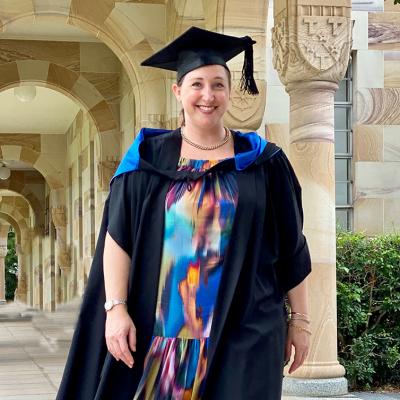
When most people think about careers in the medical field, they often picture doctors, nurses and allied health professionals first. You may have even been surprised when this article opened with a photo of Ishita and Daniel in their typical work attire – no stock-photo scrubs, stethoscopes or white coats here.
The reality is that today’s healthcare sector needs people with a wide range of skills, from engineering and data analytics to policy development and population health. The variety of roles in this space means that anyone with a passion for helping people – whether directly through hands-on care, indirectly through public health policy, or anywhere in between – can likely make a satisfying career change into healthcare.
Here’s just a snapshot of some of the lesser-known healthcare careers that you could get into through postgraduate study:
- biostatistician
- clinic manager
- drug safety associate
- epidemiologist
- health promotion coordinator
- medical science liaison
- medical writer
- public health policy officer
- research scientist
- wellbeing consultant.
Daniel and Ishita are further examples of the diversity of roles available in this field: Daniel now works as a data engagement coordinator in the Indigenous Australia Program at The Fred Hollows Foundation, and Ishita is a graduate policy officer in Queensland Health.

Recognise when you’re ready (or overdue) for a change
Before you can plan your career change into healthcare, you need to identify when the time is right for you to make this transition.
There are many catalysts that can lead people to change careers. One common reason, which is shared by Daniel and Ishita, is the realisation that you want your work to stretch further, have more impact, or deliver more meaning.
If this is your motivator for seeking a professional fresh start, healthcare is a logical field to pursue – improving the lives of patients and communities is a sure way to feel like your work is making a difference.
“I began my career as a biomedical engineer, working on cost-effectiveness studies for medical devices,” says Daniel.
“I thought I would dedicate my professional life to building and managing biomedical engineering departments within hospitals, but that started to change when I had the opportunity to work as a project leader for the State Government of Yucatán, Mexico.
“For the first time, my work went beyond one hospital department and gave me the opportunity to see the health system from a much broader perspective, and to engage with many different areas.”
“Ultimately, I realised that I wanted to use my analytical and problem-solving skills at a broader level. I wanted to understand how I could contribute to improving the health and wellbeing of whole populations. That led me to pursue a Master of Public Health and eventually change the direction of my career.”

As a former veterinarian, Ishita’s career change has felt more like a sidestep than a full departure, but her motivations were quite similar to Daniel’s.
“While working as a vet in India, I worked in rural areas, urban clinics and zoos, and these experiences made me realise how much access to healthcare can depend on resources and funding,” says Ishita.
“I remember seeing differences in something as simple as the medications available in a hospital pharmacy, or situations where clients had to buy their own basic supplies like single-use syringes.
“One experience that really stayed with me was seeing how little access veterinarians had to pre-exposure prophylaxis, despite the risks that come with the profession.”
“These experiences made me start thinking beyond individual patient care. I became interested in the systems behind healthcare – how decisions are made, how resources are allocated, and, most importantly, how we can prevent health problems before they happen. That was what drew me towards public health.”

Another common thread between Ishita, Daniel and many career changers is the desire to solve larger problems than your current role allows.
If you’ve started feeling frustrated or constrained in the change you’re able to create in your current career, this may be a sign that it’s time to branch out.
Trust in your transferable skills (you may have more than you think)
Ishita’s career change into healthcare wasn’t about starting from scratch. Rather, it was about finding ways to adapt and apply her existing skills in new settings.
“For me, the transition has been about taking the knowledge and perspective I gained through veterinary medicine and applying it at a broader population-health level,” she says.
“A lot of the skills I developed as a vet – problem-solving, communicating with different people, working under pressure and looking at problems from different perspectives – were surprisingly transferable.”
Ishita feels her master’s degree empowered her to connect these existing skills with public health.
“I really appreciated being able to choose projects and areas of study that interested me,” she says.
“This meant I could take what I already knew from veterinary medicine and look at familiar health issues in a completely different way.”
“I think that made the transition much less intimidating and helped me realise that changing careers doesn’t necessarily mean leaving everything you know behind.”
Be prepared to get uncomfortable
Daniel’s career change into healthcare was more of a jump than Ishita’s, so he couldn’t lean on quite as many transferable skills.
“As an engineer, I was very used to approaching problems through numbers, logic, and technical solutions, but moving into public health challenged me to think differently,” says Daniel.
“I suddenly found myself learning about qualitative research, policy and advocacy, and different ways of understanding complex health and social issues that don't always have a clear or mathematical answer.”
“Changing careers definitely wasn't easy, and I knew from the beginning that it would be challenging. In fact, part of the reason I chose public health was because I wanted to learn about areas that I knew were outside my strengths and experience.”
One good thing about changing careers through postgraduate study is that you get to develop your new skills – and, yes, make some mistakes at first – in a safe and supportive environment. This means you can step into your new healthcare career with a qualification and confidence.
“There were courses where I started with almost zero knowledge, and that can be tough – particularly when you’ve already spent years becoming confident in another profession,” says Daniel.
“But I think that’s also one of the most valuable parts of a career change. You don't lose the knowledge and experience from your previous career; you add a completely new set of skills and perspectives to it. Going through that process made me more adaptable and resilient, and it ultimately gave me a much broader understanding of what I can contribute professionally.”

Don't be afraid to choose something simply because you don't know much about it yet. That might be exactly the reason to study it.
Every career change in healthcare (and every career change in general) looks different. Some transitions require entirely new ways of thinking, while others involve adapting existing expertise to a new setting. But, either way, growth often comes through embracing unfamiliar challenges – and this is often the first sign that your career change is what you needed.
Upskill with intention
Just as Daniel chose a degree that filled gaps in his knowledge, you should also consider what upskilling you may need to make your career change into healthcare a reality.
Postgraduate study can help prepare you for your new industry in several ways:
- It helps you fill any skill gaps.
- It allows you to develop specialised knowledge.
- It gives you more confidence in your upcoming role.
- It presents you with new opportunities and connections.
“The Master of Public Health gave me the knowledge, practical experience and opportunity I needed to make my career change a reality,” says Daniel.
“It prepared me for my new profession in more ways than I can say – my current role in the Indigenous Australia Program at The Fred Hollows Foundation is, in many ways, a direct result of my experience at UQ.”
Select your courses mindfully
Don’t just pick a degree that sounds like the best fit. Check the specific courses included in the program to make sure they align with your career goals.
“I was particularly interested in the Indigenous Health course at UQ,” says Daniel.
“Coming from Mexico, I wanted to learn more about Indigenous health and gain knowledge and skills that I could eventually bring back to my country, where Indigenous populations also experience some of the most complex and persistent health inequities.”
“This course was particularly meaningful because it helped me better understand some of the health challenges Aboriginal and Torres Strait Islander peoples face, while learning from Indigenous perspectives.”
Another standout course for Daniel was Biostatistics.
“I really enjoyed Biostatistics because it gave me the practical skills to manage, analyse and interpret complex health data – skills I now use regularly in my work to analyse health information and develop reports to support monitoring and decision making,” he says.
“In many ways, these two courses represent what I enjoy most about public health: understanding the people and context behind health issues, while also using data and evidence to help address them.”
Identify potential mentors
You’re hoping to make a successful career transition, so it makes sense to seek mentors who have demonstrated their own achievements in the field or have even had similar career trajectories to what you’re aiming for.
For example, Ishita found an ideal role model in Dr Simon Reid, a Professor of One Health at UQ’s School of Public Health.
“Simon was someone I really looked up to during my time at UQ; coming from a veterinary background myself and moving into public health, I found his career particularly inspiring,” says Ishita.
“I ended up taking several of the electives he taught, and what I appreciated most was how approachable he was – his door was always open to students who wanted to learn or ask questions, and he never made you feel like your question was too small or silly.”
“He had a way of answering questions by looking at the bigger picture, and that really influenced the way I think about public health. I feel very lucky that I had the opportunity to learn from him.”

Of course, your teachers aren’t the only people who will impact your postgraduate study experience – there are also the peers you’ll learn alongside, many of whom will likely become valuable connections or even lifelong friends.
Coincidentally, Ishita and Daniel were in the same Master of Public Health cohort, so our interview also gave them an excellent excuse to catch up over lunch.
Gain valuable experience before you graduate
The right postgraduate program should give you a chance to put your new skills to the test before you step fully into your new career in healthcare. This also reduces the risk of a career change, as you’re able to dip your toes in a potential work environment without committing to it.
The opportunity to complete a placement was a key factor when Ishita and Daniel chose UQ’s Master of Public Health – and their placements were critical in preparing them both for their career changes.
Ishita’s capstone course included a placement at the UQ Institute for Social Science Research at Long Pocket, where she worked on projects looking at preventive public health programs.
“This was particularly valuable because it was my first real experience working in a public health setting,” she says.
“I learnt a lot of practical skills during the placement, including using tools such as Zotero and Covidence and developing literature searches using Boolean operators… but, more than that, I learnt what it was actually like to work as part of a public health team.”
During this placement, Ishita also worked on a literature review aimed at improving health outcomes for migrant men and investigated school-based programs that challenge gender norms to see how they might impact the health-seeking behaviour of young men.
She says the fact that her placement supervisor had previous experience in the Queensland Government gave her valuable insight into the kind of environment she wanted to eventually work in.

I had the freedom to ask questions and learn from people around me without feeling like I had to know everything already. The skills, connections and confidence I gained there definitely helped me take the next step into my current role.
Daniel’s placement had a direct impact on his career change as well. He completed it with the Indigenous Australia Program at The Fred Hollows Foundation, where he now works. During this placement, he supported the planning of eye health screening activities at schools in the Northern Territory.
“The placement gave me the opportunity to take what I had learnt throughout the Master of Public Health and apply it in a real setting,” he says.
“It allowed me to develop practical experience while learning how public health programs are planned and delivered in partnership with Aboriginal and Torres Strait Islander communities and organisations.”
“The placement became an important bridge between my postgraduate studies and my current career. It helped me confirm that this was an area of public health I wanted to continue working in.”
Put yourself out there
While your studies will bridge the technical gap between your current and new careers, Ishita believes getting involved beyond the classroom is the key to fully preparing yourself.
She recommends participating in everything she did:
- student clubs
- networking events
- volunteering and mentoring
- inter-university competitions
- student-staff partnerships
- public health hackathons
- Employability Award activities
- asking questions and talking to your lecturers.
“Always put yourself out there and take up opportunities even when you’re not completely sure where they might lead,” says Ishita.
“At the time, these just felt like fun things to do alongside my studies… but looking back, they actually taught me a lot about working with different people, communicating ideas, taking initiative, and stepping outside my comfort zone.”
“My degree gave me the knowledge and skills I needed to move into public health, but honestly, I think the wider UQ experience prepared me just as much.”
Final thoughts
- From Daniel: “Easier doesn’t always mean more rewarding. A genuine career change sometimes means being willing to be uncomfortable and starting again in some areas.”
- From Ishita: “Be brave. You don’t have to know exactly where you’re going before you take the first step. Sometimes you just need to be willing to try something new and see where it takes you.”
What’s next?
Read more UQ career change stories to get inspired, or find a postgraduate program to kickstart your career transition today.