Between lectures, tutorials, social clubs and study sessions, it can sometimes feel impossible to find time for a nutrition-balanced meal as a university student.
But healthy eating is essential if you want to do and feel your best at uni. So, we’ve asked Master of Dietetics Studies graduate Patrick to make this task a little easier by putting together a how-to guide for building a healthy, balanced meal. Here’s what he has to say.
Balanced meals: your guide to good eating
There’s no one-size-fits-all approach to what and how much we should eat at each meal. This depends on a variety of factors including your age, weight, physical activity level, and – most importantly – what you like to eat.
However, there are some basic steps you can use to build a healthy, nutrition-balanced meal that’s both tasty and easy to prepare. These guidelines are backed by a large body of research that suggests we will be healthier, have a lower risk of chronic disease, and will meet all our nutritional requirements, if we follow them to prepare balanced meals.
So, what are the steps to building a healthy meal?
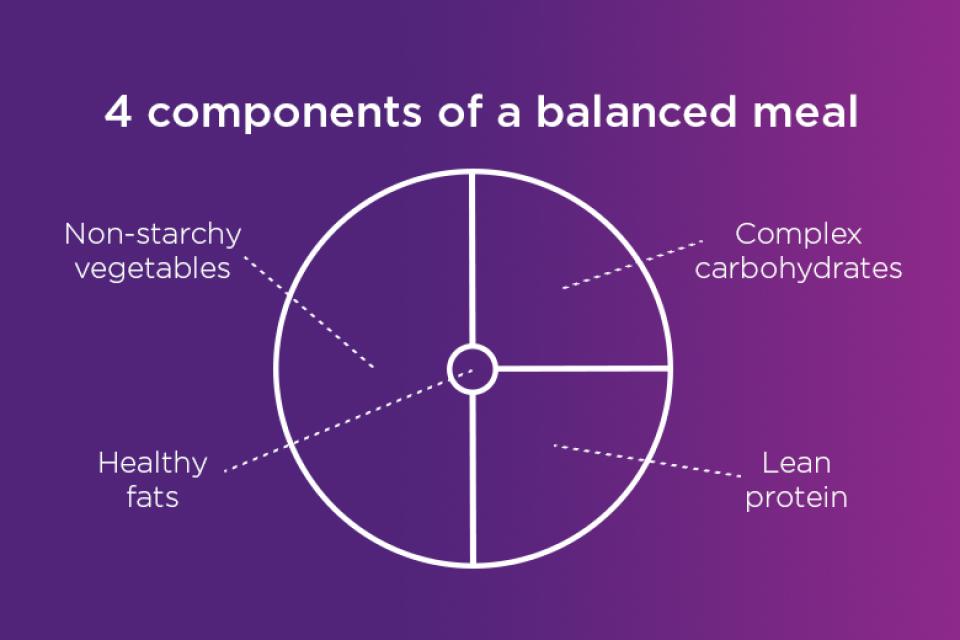
Step 1: fill half of your plate with non-starchy vegetables
Non-starchy vegetables include any vegetables that aren’t potatoes, peas and corn. While starchy vegetables are a great source of nutrition, they should be included in the carbohydrate portion (step 2).
Vegetables are important for a healthy diet because they’re packed with key vitamins and minerals you won’t find in other food groups. They’re also a great source of fibre.
Non-starchy vegetables are very low in calories and energy – meaning you get a lot of bang for your buck per serve. That’s why these form the largest portion of a balanced meal.
Step 2: fill a quarter of your plate with complex carbohydrates
Carbohydrates are the main source of energy in our diet, and they’re also a great source of vitamins and minerals.
However, not all carbohydrates are digested in the same way.
It’s best to choose complex carbohydrates when building your nutrition-balanced meal. This generally means going for carbohydrate-containing foods that are less processed, which can include:
- wholegrain breads and cereals
- the starchy vegetables mentioned above (potatoes, peas and corn)
- wholegrain pasta
- brown rice
- legumes.
Step 3: fill a quarter of your plate with a lean protein source
Protein forms the building blocks for your body and is a key part of any balanced meal or diet.
You can get a good source of lean protein from both animal foods – chicken, eggs, fish, lean beef, dairy – and from plant sources like tofu and legumes such as lentils, beans and chickpeas.
Step 4: add a small portion of healthy fats
Fat is an important part of any balanced diet.
However, like carbohydrates, it’s important to make sure we get the right type of fat.
Unsaturated fats are linked to improved heart health and a lower risk of some chronic diseases. Good sources of unsaturated fats include:
- extra virgin olive oil
- nuts and seeds
- avocado.
Although fats are a key source of nutrients, they also have twice as much energy/calories per serve as carbohydrates and proteins, so we only need a small portion with each balanced meal. Aim for about a thumbnail-sized portion of your fat source at each meal.
Putting it all together
Now that we know the 4 key steps to building a balanced meal, we can put them all together to create a delicious, healthy meal. The possibilities are endless.
Sometimes it’s better not to think of a plate when building the meals. If you’re preparing a pasta or curry, think of a chopping board and how much each portion would take up on the board.
Balanced meal examples
Here are some examples to kickstart your journey to building healthy, balanced meals.
Breakfast: scrambled eggs on toast

- Non-starchy vegetables: spinach, tomato and mushroom
- Complex carbohydrate: wholegrain toast
- Lean protein: 1-2 eggs
- Unsaturated fat: small spread of avocado
Lunch: vegetarian burrito bowl
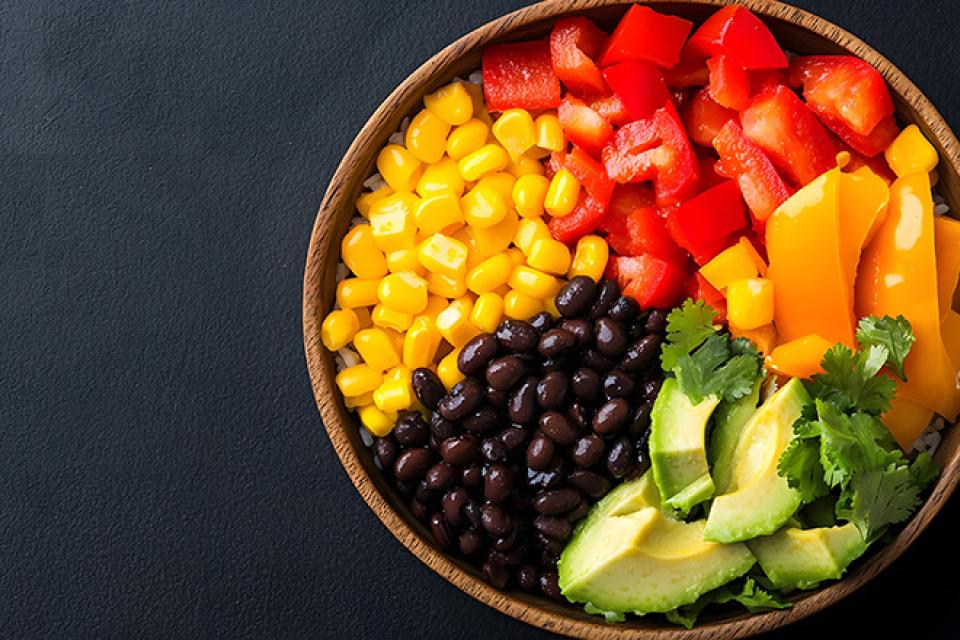
- Non-starchy vegetables: cherry tomatoes, corn, capsicum
- Complex carbohydrate: brown rice
- Lean protein: black beans
- Unsaturated fat: ¼ diced avocado
Dinner: spaghetti Bolognese
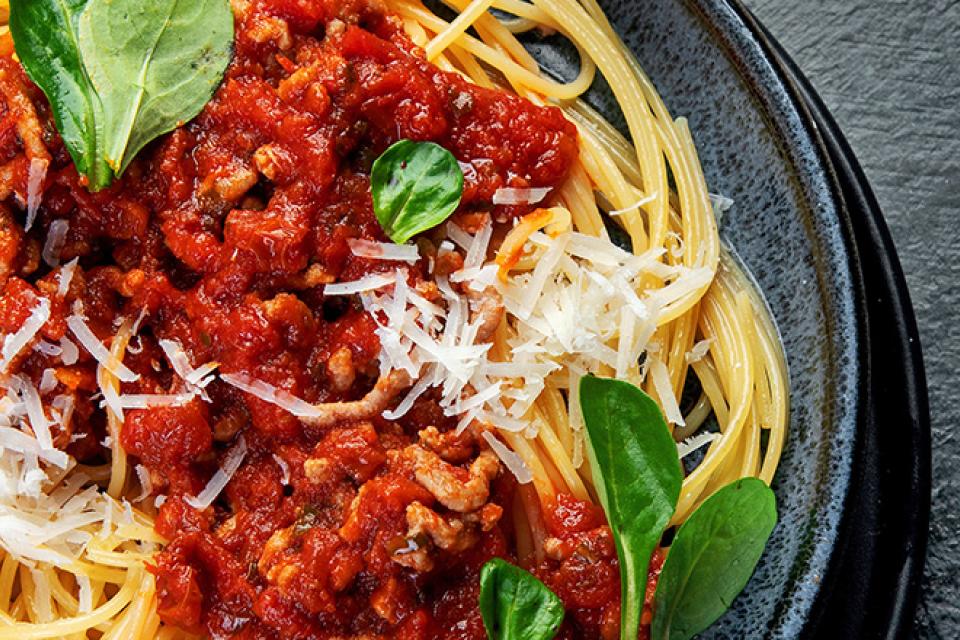
- Non-starchy vegetables: onion, celery, canned tomatoes, zucchini, mushroom
- Complex carbohydrate: wholegrain spaghetti
- Lean protein: extra-lean beef mince
- Unsaturated fat: 1 tablespoon olive oil
Are you interested in exploring how a nutrition-balanced meal can make people healthier? Consider becoming a dietitian by studying a Bachelor of Nutrition Sciences / Master of Dietetics Studies.
Author: Patrick Murphy
Patrick is a recent graduate of UQ’s Master of Dietetic Studies. He’s passionate about all things food and interested in how diet can improve the health and quality of life for people from all walks of life.