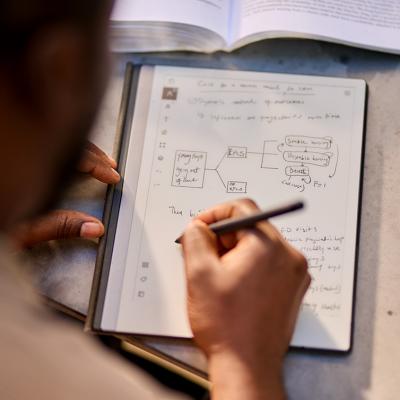
What does a PhD look like beyond the lab or the library?
At UQ, many PhD candidates take their research into the world – through fieldwork, placements, conferences, and global collaborations. These hands-on experiences help bridge the gap between theory and practice, preparing you for wherever your research journey leads next.
To give you a taste of what’s possible, we asked some of our current PhD candidates to share their most memorable placements and field trips. Here are a few of their experiences.
Amelia went on field trips to Heron Island and completed a placement at CSIRO
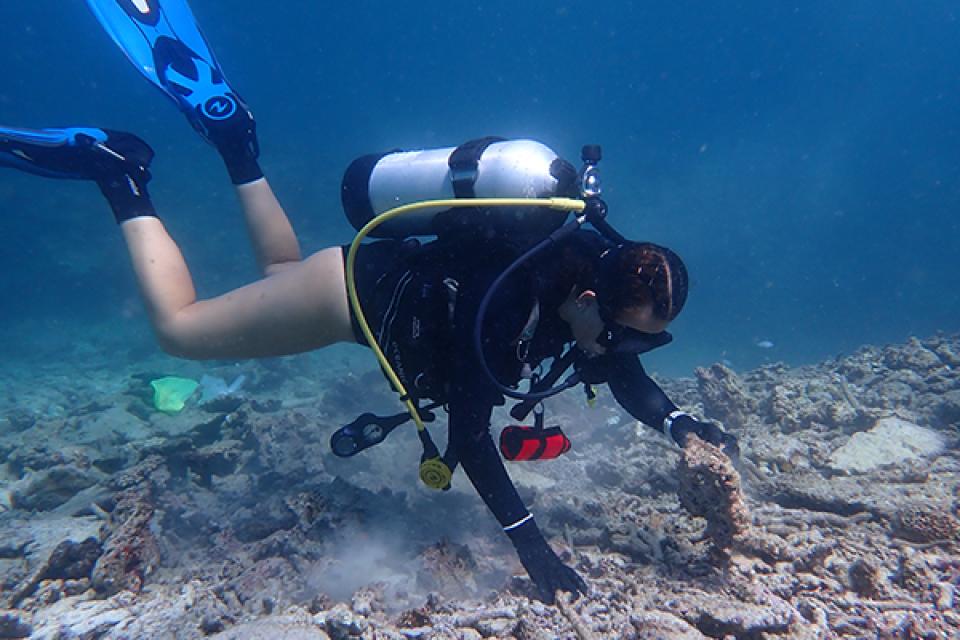
As a marine ecology student, field trips were a large part of Amelia Desbiens’ PhD, especially during the data collection stage of her research.
“At UQ, we are lucky to have a fantastic research station based on Heron Island, where I spent several months each year,” she says.
“My field trips usually involved a mix of diving at sites across Heron Reef to conduct targeted surveys of species abundances, as well as to collect specimens to bring back to the research station aquaria facilities to be used in ecological experiments.
“The flow-through seawater system at the Heron Island Research Station made it possible to house animals (including my study species, the crown-of-thorns starfish) in aquaria long-term, which was vital to my experiments.”
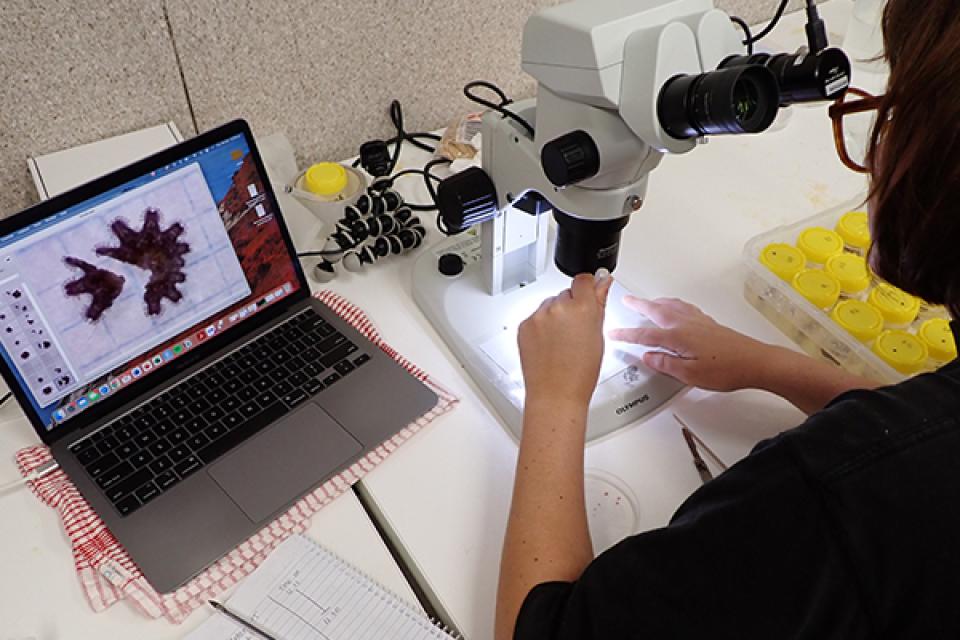
Amelia’s field trips were quite intensive, typically including long hours in both the water and the lab. But there were certainly perks to conducting research in such a picturesque location.
“There was always time to watch the sunset over the reef each afternoon,” she says.
“I will always treasure the memories of time spent with other students and researchers in this special place.”
As part of her Career Development Scholarship, Amelia also completed a placement at CSIRO.
“My work at CSIRO was predominantly desktop-based, applying mathematical stock assessment models to Northern Prawn Fishery (NPF) data to inform fisheries management procedures,” she says.
“As part of this placement, I was able to present my findings to stakeholders during the biannual NPF resource assessment group meeting.”
“My placement allowed me to expand my scientific skillset and afforded me the chance to connect with diverse groups of people in the marine conservation and management industries.”
Beatris travelled to Samoa, Tonga, Bangladesh, the US and the Dominican Republic for her research
Beatris Mario Martin’s PhD research into infectious diseases has taken her all over the world. Her fieldwork opportunities through UQ’s ODeSI team have included:
- 3 weeks in Samoa as part of a lymphatic filariasis (LF) survey, where she contributed by collecting blood and running laboratory tests
- 2 weeks in Tonga, supporting fieldwork for a project on LF elimination, where she helped organise community and school visits, collected blood samples, helped conduct lab analysis, and performed data checking
- attending a World Health Organisation (WHO) workshop in Bangladesh, where she helped facilitate some of the sessions.
“The experience of fieldwork contributes to a more comprehensive understanding of how the data I analysed during my PhD was produced. It helped me become more conscious of the challenge it is to obtain the data, the limitations and the potentiality of the research I am conducting.”
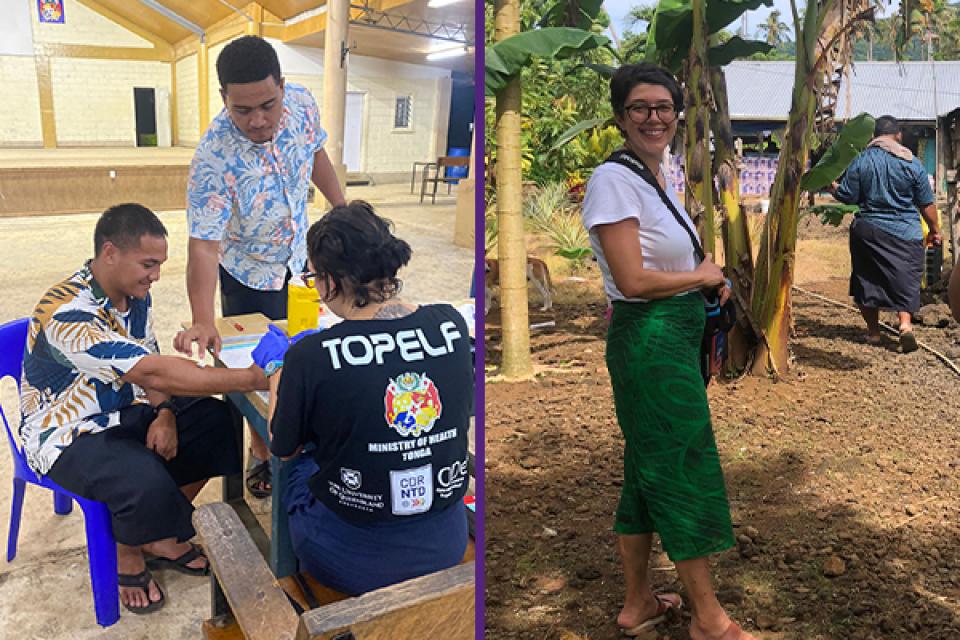
Beatris’ research has taken her on field trips abroad, including to Tonga (left) and Samoa (right)
During her PhD, Beatris also visited research partners in Atlanta, US – specifically at Emory University, the Carter Center, and the Coalition for Operational Research on Neglected Tropic Diseases (COR-NTD).
“The focus of this visit was a partnership to investigate the existence of areas of residual transmission of LF in the Dominican Republic, using novel serological approaches and spatial epidemiology,” she says.
“As part of this visit, together with collaborators from the Carter Center, I visited the Dominican Republic, where I met with our local partners and presented the results from my PhD.”
Beatris has collaborated with international experts including Professor Lance A. Waller from the Rollins School of Public Health at Emory University
Yufan completed a placement and conducted field data collection
During the second year of her PhD, Yufan Liu completed a placement at the Queensland Department of Environment, Tourism, Science and Innovation. This was facilitated by UQ’s Graduate Research School Career Development Framework, which includes an HDR placement program.
“The placement provided me with valuable real-world insights into how government departments operate on tourism-related projects,” says Yufan.
“It was a great opportunity to understand the practical aspects of project implementation.”
“The team I worked with during the placement also received an award for one of the projects I was involved in.”
Yufan also took part in field data collection within various industry collaboration projects, alongside her PhD supervisors.
“We partnered with BUPA Aged Care and Olive Express, a social enterprise that provides immersive virtual train journeys designed specifically for older adults,” she says.
“Using biometric tools such as galvanic skin response, we collected emotional data from residents in BUPA aged-care homes as they experienced the Olive Express virtual journey.”

“I also conducted field data collection with another of my supervisors from the School of Psychology, working alongside academic staff and fellow PhD students during the Schoolies event on the Gold Coast.”
Where will your research project take you?
Whether it’s collecting data on coral reefs, presenting to global health organisations, or testing innovations in government departments, a UQ PhD gives you the chance to apply your research in meaningful, hands-on ways.