Regular physical exercise can make a world of difference during your uni semesters. But this doesn’t necessarily mean you need a gym membership or a personal trainer. Here, UQ PhD candidate Kevin Huang explores why physical activity is so beneficial and how you can get more active at uni.
When people hear the words "physical activity", they often equate it to "exercise". If you don't consider yourself a sporty type, exercise can conjure up bad memories of sweaty and painful hours spent in the school gym.
But did you know that physical activity encompasses any movement with an intensity at or above the equivalent of a brisk walk?
You can achieve this in all sorts of ways, not just through sport. Other activities like walking between bus stations, climbing the stairs to your apartment, gardening, or even some stretching can all count as physical activity.
Participating in at least 150 minutes of moderate-intensity physical activity each week reduces the risk of chronic health conditions such as heart disease, obesity, kidney disease and stroke. It also helps protect you against depressive and anxiety symptoms and is associated with lower stress and higher quality of life.
Many university students don’t meet physical activity guidelines, and those who do can struggle to maintain it once the semester intensifies. Your whole life is completely flipped when university begins. Suddenly you're juggling multiple commitments, such as living away from home, paying bills, working, and spending time with friends, all while managing class attendance and assessments.
Juggling study and life can be a difficult task, and this is one reason students are increasingly susceptible to developing mental health difficulties like depression, anxiety and loneliness. The good news is that regular physical activity may help prevent or manage these feelings, enabling you to cope with student life more effectively.
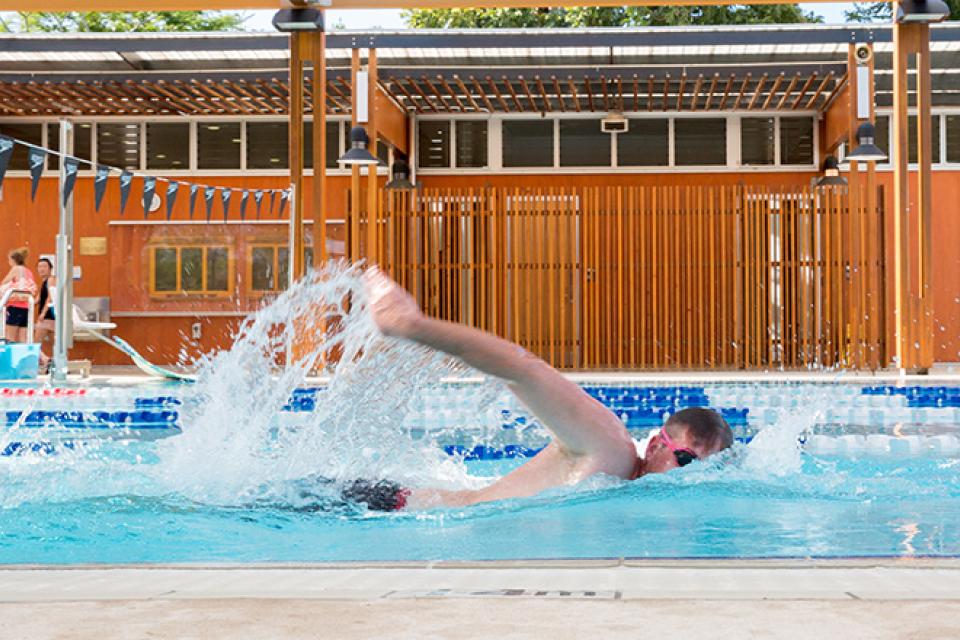
How can physical activity help you at uni?
It helps you think and feel better
Sufficient physical activity doesn’t just improve your physical health; it also helps you feel and think better. It’s strongly linked to better academic performance and is a great way to form deeper friendships with those who you share a common interest with.
It improves your study efficiency
Whether it’s going for a walk to the nearest coffee shop, or scaling a mountain to enjoy some scenery, physical activity is an excellent way to improve your health while taking a well-deserved break from your desk. You might worry that taking a break is a waste of time, especially if you’ve got exams or assignment deadlines looming. But because you’ll return feeling refreshed and reinvigorated, this can ultimately lead to more efficient study.
It can keep you healthy without breaking the bank
Being physically active doesn’t have to be expensive or require lots of equipment – it can even be free. Activities like walking, running and hiking only need a pair of shoes and a water bottle. They don’t require weekly subscriptions. These types of free physical activity allow you to not break your bank and remain healthy at the same time.
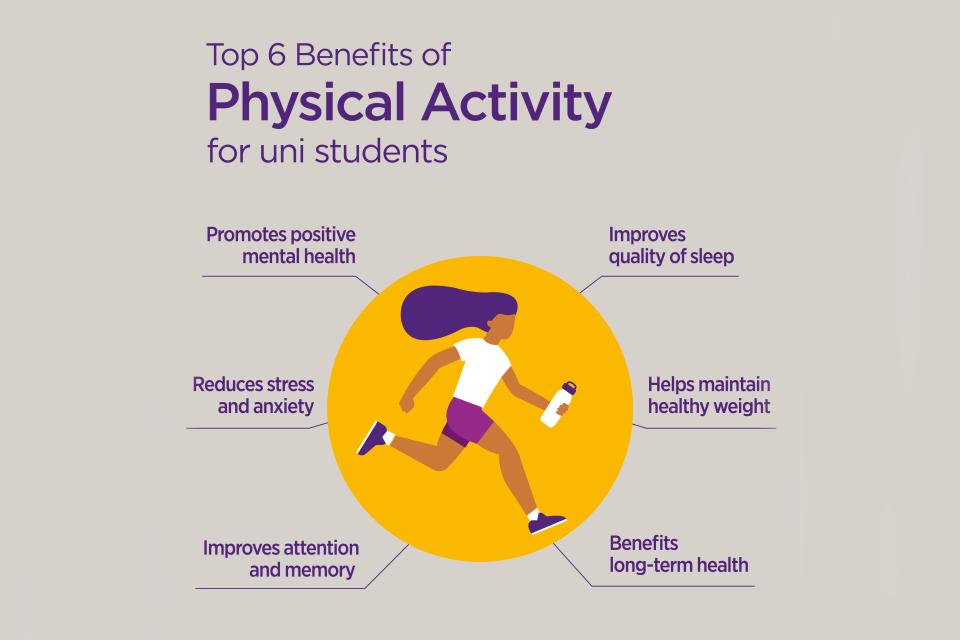
Put simply, there are 6 key ways physical activity can benefit you at uni
- It promotes positive mental health.
- It improves your quality of sleep.
- It helps you maintain a healthy weight.
- It provides long-term health benefits.
- It improves your attention and memory.
- It reduces stress and anxiety.
Top tips: how to make progress towards your physical activity goals
1. Set a SMART goal (Specific, Measurable, Attainable, Realistic, Timed)
Goals are intrinsic to our motivation. Setting a goal helps us take active steps towards what we need to get done. It focuses our effort on what is important and enables us to persevere even when we do not feel like it.
However, setting realistic goals is important as well. An unrealistic/unachievable goal is likely to hinder progress and even decrease our motivation.
- A non-SMART goal might look like: “I want to be physically fit.”
- A SMART goal looks like this: “I aim to do 3km runs 2 times a week, every week. I want to be able to complete this run in under 20 minutes within 3 months and maintain this pace for the rest of the year."
2. Keep track of your progress
Part of goal setting is keeping track of where you’re currently at. This not only helps with your motivation (imagine comparing your physical activity frequency now and again in 6 months), but it also helps you track when you tend to increase or decrease physical activity. Noticing these habits boosts our awareness of barriers and enablers to developing a healthy and active lifestyle.
There are tons of free apps/devices that can help you track your physical activity automatically (e.g. Strava, Fitbit, smart watches).

3. Learn about the different types of physical activity available
Different types of physical activity suit different people. The best type of physical activity for you is the one you most enjoy doing, especially when university life gets tough. This might be going for a walk or a swim, an intense sprint, or even some relaxing yoga. If you enjoy the interaction side of sports, consider joining a team. This will create a routine that helps meet your physical activity and social needs at the same time.
4. Join Fit4Study
Fit4Study is a 4-week course that aims to help university students develop healthy physical activity habits. You’ll learn about the different types of physical activity in more depth and actively engage in discussions about common barriers and enablers of physical activity that you and other students experience. It’s a great opportunity to meet like-minded students and keep each other accountable as you jump into a busy semester.
Next steps: Learn how to build a healthy, balanced meal to fuel your physical activity, or explore the importance of body image positivity for uni students.
Are you interested in helping people – both at uni and beyond – improve their wellbeing through physical activity and nutrition? Consider studying a Bachelor of Human Movement and Nutrition Sciences or Master of Dietetics Studies to turn your passion for healthy living into a career.
Author: Kevin Huang
Kevin is a PhD candidate with the School of Human Movement and Nutrition Sciences. Having moved to Australia as an international student, Kevin finished his undergraduate studies majoring in psychology, and he has been actively involved with research on university students’ mental health with a specific focus on physical activity and behavioural change interventions.
Sources
- Center for Collegiate Mental Health 2017 Report | National Center on Safe Supportive Learning Environments (NCSSLE). (2022). Retrieved 28 July 2022, from https://safesupportivelearning.ed.gov/resources/center-collegiate-mental-health-2017-report
- Cuijpers, P., Cristea, I. A., Ebert, D. D., Koot, H. M., Auerbach, R. P., Bruffaerts, R., & Kessler, R. C. (2016). Psychological treatment of depression in college students: A metaanalysis. Depression and Anxiety, 33(5), 400–414.
- Herbert, C., Meixner, F., Wiebking, C., & Gilg, V. (2020). Regular physical activity, short-term exercise, mental health, and well-being among university students: the results of an online and a laboratory study. Frontiers in psychology, 11, 509.
- World Health Organization. 2022. Physical Activity. Retrieved 28 July 2022, from https://www.who.int/news-room/fact-sheets/detail/physical-activity