Are you looking to step up in the resources sector? Completing the right mining postgraduate courses could be the key to unlocking your next career move.
Sonika Selvaraj is a full-time mining engineer, working for Thiess on a fly-in, fly-out (FIFO) roster. When her company offered for her to study the Graduate Diploma in Resource Development at UQ, she wasn’t sure exactly where the degree might lead her – or how she could possibly fit studying into her already hectic schedule.
But now, partway through this postgraduate mining program, Sonika thinks it’s one of the best opportunities she’s ever had.
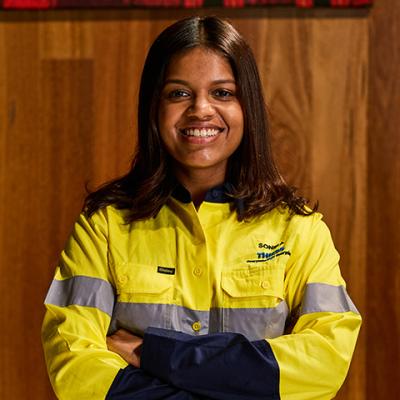
This degree has helped me connect theory with practice. That deeper understanding has given me more confidence in my role and a clearer sense of where I want to grow in the field.
What inspired you to study and work in mining/resource development?
Sonika: It was purely by chance, to be honest! After finishing my studies, I was aiming for a graduate program in either oil and gas or mining, and I ended up in mining. Since then, I’ve fallen in love with the industry and the challenges it brings, and I wouldn’t change a thing.
What was your path to studying this postgraduate mining program?
Sonika: I’ve had an interesting career path. I started my journey at UQ as an international student completing my Bachelor of Engineering majoring in Chemical and Metallurgical Engineering. I went on to complete a Master of Health and Safety and got into a graduate program with Thiess as a safety graduate.
After a few years, the opportunity to become a mining engineer arose, and I jumped at it. Whilst gaining my feet in the mining engineering world, I was fortunate to be supported by Thiess to pursue this postgraduate program, which has helped bridge my practical experience with further technical knowledge.
How has returning to study shaken up your routine, and what steps did you take to prepare for this change?
Sonika: Going back to study while working FIFO really turned my routine upside down at first. Juggling long shifts, travel days, and the mental fatigue of site life with assignments and readings felt like a big challenge. I had to be really intentional with my time, carving out study hours on my days off and making the most of travel or quieter moments for lighter work. It wasn’t easy, but once I got into the rhythm of the semester, it became more manageable.
To prepare for postgraduate study, I did the usual things like setting up a study space and planning how to juggle FIFO with assignments. But the funniest part was realising I didn’t actually own any highlighters at home. I’ve always had them lying around at work but never needed them in my home life until returning to uni again… especially as a serial note-highlighter!
How has the Graduate Diploma in Resource Development helped you achieve your career goals and find success?
Sonika: Having already worked in mining engineering for a year before starting postgrad, the degree has helped me connect theory with practice. It’s been interesting to learn the technical reasoning behind things I’d already seen happen on site – like how factor of safety values are derived. On site, I’ve always been exposed to those numbers but never really understood where they came from. Through my coursework, I’ve learnt the theory and calculations behind those values, and now when I see them in practice, I have a much stronger appreciation of the reasoning and decisions that underpin them.
This deeper understanding has given me more confidence in my role and a clearer sense of where I want to grow in the field. I can definitely see myself moving into operational leadership roles now, and that’s what I’m aiming for at the moment.
The deeper understanding you gain from postgraduate study won’t just make you feel more confident in your current role – it could also open a world of opportunities including promotions and salary increases. UQ postgrads earn an average 33% pay rise within 3 years of graduating.*
*Based on median salaries reported by domestic postgraduate coursework graduates employed full time and surveyed between 2023 and 2025 in the Graduate Outcomes Survey-Longitudinal by Quality Indicators for Learning and Teaching (QILT).
Which mining postgraduate courses and teachers have helped you the most?
Sonika: What’s helped me most isn’t just a single course or teacher, but the fact that every lecturer I’ve had has been incredibly responsive to my emails. As an online student, that kind of support makes a huge difference. It makes you feel connected, supported, and not left behind – even when you’re studying from a distance.
My favourite course so far has been Applied Geomechanics. Coming back to uni after some time away, it was definitely a challenge, as the course was full of equations and theory that took real effort to get my head around. But I’m really proud of how I adapted, pushed through, and ended up doing well.
“Conquering something that seemed so daunting at first gave me a lot of confidence and reminded me that I can rise to the challenge.”
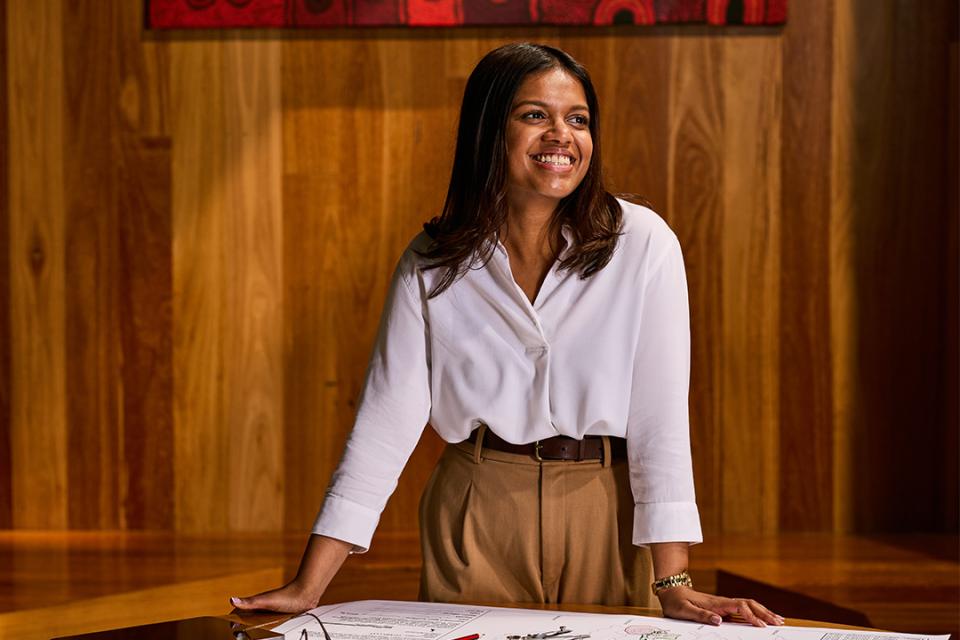
What does your average day look like as a postgrad student?
Sonika: Average days don’t really exist in FIFO life, and studying on top of it definitely doesn’t make them any neater! My routine has been about balancing work and study however I can. On site, my focus is completely on the job, with the occasional quiet moment for a bit of reading or note review. Then, on my days off, I switch gears and dedicate bigger chunks of time to assignments and lectures.
It’s less about a perfect daily schedule and more about making the most of whatever time I can grab… and being disciplined enough to actually do it.
And what does your average workday look like?
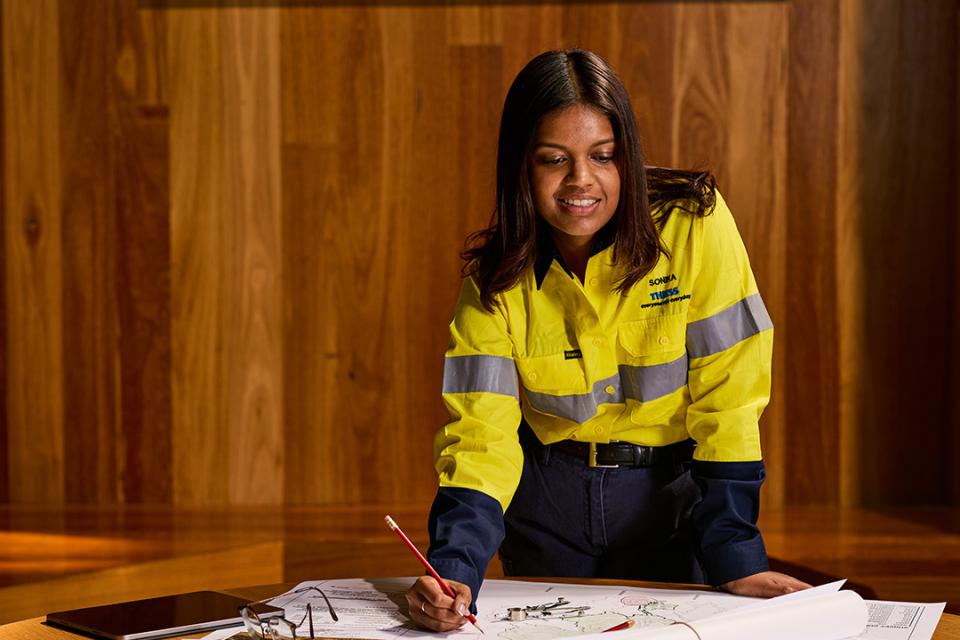
Sonika: I’m currently a drill and blast engineer working FIFO on an 8/6 roster – living in Brisbane but flying up to site for my swings. It’s a great balance that lets me get hands-on with the work on site while still being based in the city.
I’m still fairly new to this specific role, so each day is about building experience and getting involved in different aspects of the work. A typical day includes:
- attending production meetings
- making sure the weekly schedule is on track
- designing drill and blast patterns.
“The most rewarding part is seeing all the planning come together. There’s nothing quite like watching something you’ve planned and designed go from the drawing board to the moment the button is pressed – it’s a pretty incredible feeling.”
Why did you choose UQ for this degree?
Sonika: UQ was actually chosen for me through Thiess, who partnered with the University to create this program. When the opportunity was offered, I jumped at it because it was a perfect fit for where I was in my career.
What advice would you give someone considering a postgraduate mining degree?
Sonika: Do it. Postgraduate study is one of the best ways to upskill, broaden your opportunities, or even pivot into a completely different career path like I did.
“It’s never too late to learn, and the confidence and perspective you gain from backing yourself academically will carry over into every part of your career.”
How can you study mining postgraduate courses at UQ?
Like Sonika, you could take the next leap in your mining career by studying a 2-year Graduate Diploma in Resource Development. Alternatively, study a 1-year Graduate Certificate in Resource Development and choose from 2 fields of study:
- Mining Foundations
- Mining Operations.
Both programs have been co-designed with industry experts.
Not sure if you’re prepared to go back to study? Download our guide to getting postgrad-ready in 6 months.
Or if you're ready to master the unknown now, find your postgrad program at UQ and apply today.