


Master of Music
Overview
Extend professional pathways in performance, academia, or creative production.
Whether your interests lie in performance, composition or research, this postgraduate program allows you to pursue focused study supported by experienced musicians and educators.
Early study will see you refine your artistic direction and identify areas for deeper exploration. Later, substantial creative or research projects help you build specialist expertise.
Performance opportunities, intensive supervision and project work support both artistic and professional growth. The program encourages independent thinking while maintaining strong practical engagement.
This program can help you advance as a performer, composer, educator or researcher within the music profession.
Program highlights
- Undertake advanced study designed for music educators, administrators, community musicians, composers, performers and researchers.
- Complete core courses in research methods and a research thesis, or a professional engagement project.
- Benefit from intensive courses and overseas independent study opportunities.
- Choose to follow a research-focused pathway to pursue a Higher Degree by Research.
How you'll learn
Your learning experiences are designed to best suit the learning outcomes of the courses you choose.
- Overseas study
- Research experience
- Studios
- Workshops
What you'll study
At UQ, degrees are called 'programs' and subjects are called 'courses'. Here's a sample of the courses you could study in this program:
- Advanced Musicianship [Core course]
- Introduction to Music Technology [Elective]
- Applications of Music Technology [Core course]
- Advanced Directing Choral Ensembles [Elective]
- Composing Music [Elective]
Career possibilities
Postgraduate study can take you anywhere. Here are some of the careers you could be on your way to:
- Head of music
- Composer
- Conductor
- Music therapist
- Vocal performer
- Instrumental performer
- Music school coordinator
- Music program director
- Music researcher
- Instrument teacher
Average annual salary range
Music Therapist
seek.com.au
Next steps after graduation
Graduates of the Master of Music shape and lead musical practice across a range of professional contexts. You’ll be equipped to advance your career in performance, directing and conducting, composition and music education, or to take on new opportunities within schools, studios, arts organisations and community settings.
The program also positions you to contribute to the evolving landscape of music through creative projects, collaborations and leadership in professional practice.
If you’re looking to continue your academic journey, this degree provides a strong foundation for further research. Choose to pursue doctoral studies or specialised research pathways, building on your project or thesis work to deepen your influence in the field.

The varied and flexible curriculum design of the Master of Music was a major factor in my decision, as it promised a comprehensive educational experience tailored to my interests and career goals.
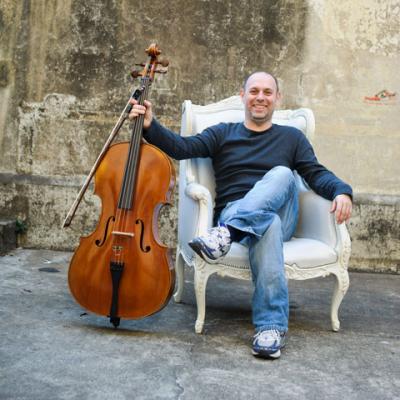
UQ honed my critical and performance skills. One of the things I found particularly useful was the rigour of doing a thesis.
The varied and flexible curriculum design of the Master of Music was a major factor in my decision, as it promised a comprehensive educational experience tailored to my interests and career goals.
UQ honed my critical and performance skills. One of the things I found particularly useful was the rigour of doing a thesis.
Events
See all events
Stories
See all stories

UQ people
Meet the CEO championing neurodiversity in the workplace
4-minute read

Careers
Emerging careers in the arts and communication industries
5-minute read
Stories
See all storiesUQ people
Meet the CEO championing neurodiversity in the workplace
4-minute read
Careers
Emerging careers in the arts and communication industries
5-minute read
Entry requirements
Entry requirements
It's possible to complete this degree in 1.5 years or 1 year depending on your qualifications and experience.
You can apply for any duration as long as you meet the entry requirements. You may also be eligible to apply for credit or exemptions to shorten your degree further. You'll graduate with the same qualification no matter how long you take to complete the degree.
1.5-year degree (24 units of study)
To be eligible to complete the degree in 1.5 years full-time (or part-time equivalent)full-time (only available as full-time study), you'll need:
- a bachelor's degree (or equivalent) in a relevant discipline (see below), or
- the Graduate Certificate or Graduate Diploma in Music from UQ*, or
- a bachelor's degree (or equivalent) in any discipline, plus 2 years full-time equivalent, relevant work experience (see below), or
- to have successfully completed 3 years of study towards an approved qualification at an overseas partner institution, with a formal pathway to the Master of Music (1.5-years duration).
You must have a grade point average (GPA) of 4.0 on a 7-point scale in your previous qualification.
* Please note if the Graduate Certificate is used as the basis of entry into the program you will not be eligible for credit towards the Master's program.
1-year degree (16 units of study)
If you have relevant prior learning or experience, you can reduce the number of courses you need to complete and graduate in less time.
To be eligible to complete the degree in 1 year full-time (or part-time equivalent)full-time (only available as full-time study), you'll need:
- a bachelor honours degree (or equivalent)** in a relevant discipline (see below).
You must have a grade point average (GPA) of 4.0 on a 7-point scale in your previous qualification.
**You must have completed a substantial research project in your Honours degree equivalent to at least one semester of full-time study (or part-time equivalent).
Relevant disciplines for previous qualifications
Relevant disciplines include studies in performance, composition, musicology, or music education*.
*For the field of music education, a degree qualifying a person to become a classroom music teacher satisfies the requirement.
You must have completed at least a major, field of study, or approximately 30% of program content in the discipline, including a mix of introductory and advanced courses.
Relevant work experience
Relevant work experience includes work in music teaching, arts administration, or any other profession where you have built a portfolio demonstrating your music expertise. which should be supported with evidence (see below). Applications on the basis of post-secondary study and/or work experience will be assessed individually and applicants may be required to attend an interview test.
Evidence of relevant work experience should include a letter from your employer (and/or previous employers) stating the following:
- that you work (or worked) within the specified organisation
- the nature of your work, including any relevant duties and responsibilities
- the length that you were there (i.e. 2 years)
- the level at which you worked (full-time, part-time or casual)
*if part-time or casual, please list the average amount of hours worked per week.
Related programs
Depending on your previous qualifications and current goals, you might want to consider
one of these related programs:
English language requirements
IELTS overall 6.5; reading 6; writing 6; speaking 6; listening 6. For other English Language Proficiency Tests and Scores approved for UQ
TOEFL iBT (including Paper Edition) - Overall 87, listening 19, reading 19, writing 21 and speaking 19.
PTE Academic - Overall Score of 64 and 60 in all sub bands.
BE - A minimum overall grade of 4 plus a minimum grade of C in all macro skills.
CES - Overall 176 and 169 in all sub bands.
OET is not accepted.
There are other ways to meet the English language requirements. For some programs, additional conditions apply.
Student visas
International students who are accepted into full-time study in the Master of Music are eligible to apply for an Australian student visa (subclass 500).
There are a number of requirements you must satisfy before a visa is granted, including the Genuine Student (GS) requirement.
Fees and Scholarships
Indicative annual fee
Approximate yearly cost of tuition (16 units). Your fees will vary according to your selected courses and study load. Fees are reviewed each year and may increase.
$10,515
2026
Fee information for 2027 is not yet available. Fee information displayed is for 2026.
Approximate yearly cost of full-time tuition (16 units). Your fees will vary according to your study load. Fees are reviewed each year and may increase.
AUD $48,080
2027
Government assistance
Financial aid
As an international student, you might be eligible for financial aid – either from your home country, or from the Australian Government.
HECS-HELP
Domestic places in the Master of Music are Commonwealth supported, as long as you meet all Commonwealth supported place eligibility requirements.
This means the cost of your education is shared between you and the Australian Government. Instead of tuition fees, Commonwealth supported students pay what are called student contribution amounts.
If you have a Commonwealth supported place, you may also be eligible for HECS-HELP. This is an Australian Government loan scheme to assist eligible students with the cost of their student contribution amounts.
Centrelink support
The Australian Government offers a number of income-support payments to eligible Australian university students.
Scholarships
You may be eligible for more than 100 scholarships, including:
How to apply
Applying online
All international applications should be submitted to UQ. If you prefer, you can use an approved UQ agent near you.
The program code for the Master of Music is 5368.
This program is available in multiple durations. You can apply for any duration as long as you meet the entry requirements.
When you apply, select your preferred duration. If you don't meet the requirements for your first preference, we'll automatically consider you for entry into a longer duration.
Applying online
All domestic applications should be submitted to UQ.
The program code for the Master of Music is 5368.
This program is available in multiple durations. You can apply for any duration as long as you meet the entry requirements.
When you apply, select your preferred duration. You can also ask us to consider you for a longer duration if you don't meet the entry requirements for your first preference.
Important dates
The closing date for this program is:
- To commence study in semester 2 - May 31 of the year of commencement.
- To commence study in semester 1 - November 30 of the previous year.
Visa processing times vary. Apply and accept your offer as early as you can.
To learn more about UQ dates, including semester start dates, view the Academic Calendar.
Important dates
The closing date for this program is:
- To commence study in Semester 1 - January 31 of the year of commencement.
- To commence study in Semester 2 - June 30 of the year of commencement.
To learn more about UQ dates, including semester start dates, view the Academic Calendar.
Aboriginal and Torres Strait Islander applicants
For support with applying – or if you have any questions about university life – get in touch with our Aboriginal and Torres Strait Islander Studies (ATSIS) Unit.
Explore other programs
Helpful advice, right when you need it
Get useful info to help you navigate the confusing parts of getting into uni. Scholarship reminders, access to events and experiences, and advice from real students.
Sign up for updates. (No spam! We promise.)