

Deepen your understanding of how and why things work.
Study the laws of physics and explore how these principles are applied in our everyday life – from understanding the nature of time and the relationships between matter and energy, to developing new technologies.
Combine your scientific and mathematical knowledge with skills in computer programming and statistics to understand theories relating to quantum mechanics, biophotonics, astronomy or astrophysics.
Your high-level technical, analytical and problem-solving skills will lead you to a wide range of rewarding opportunities in sectors such as education, finance, engineering, computing and management.
Alternatively, continue into a higher degree by research to uncover new scientific knowledge or apply your findings to develop advanced materials, electronic and optical devices, products or processes.

Career possibilities
Our programs prepare you for your first job and beyond. Here are some of the careers you could be on your way to:
- Materials scientist
- Applied physics lecturer
- Health physics surveyor
- Data scientist
- Physicist
- Policy adviser
- Research scientist
- Quantitative analyst
- Quantum physicist
- Nanotechnology and biosensor application specialist
Average annual salary range
Research Analyst
seek.com.au
Average annual salary range
Data Scientist
seek.com.au
Next steps after graduation
When you graduate, you'll be in high demand by employers for your advanced technical, communication, independent thinking and problem-solving skills.
Expect to find employment in:
- the energy and climate sector
- computing and data science
- government and university laboratories
- scientific consulting
- financial modelling
- science communication and education
- the health and medical sector.

The technical knowledge and analytical skills I gained from studying Physics has opened many doors for me - from going on exchange in the United States to completing my Master of Financial Mathematics and changing careers to move into strategy consultancy.
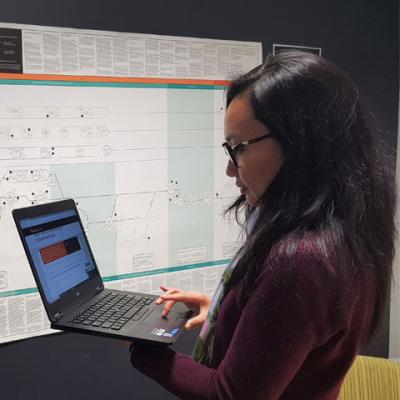
The scientific and mathematical knowledge and practical research experience I gained during my time at UQ has been instrumental to my career success to date - so regardless of what lies ahead, I’m confident I’m well prepared.

UQ has a fantastic physics department, the research is excellent, and the co-curricular and extra-curricular activities enhance your learning significantly. Take advantage of the many opportunities to try new, unusual, and exciting things – you’ll be doing yourself a great service.
The technical knowledge and analytical skills I gained from studying Physics has opened many doors for me - from going on exchange in the United States to completing my Master of Financial Mathematics and changing careers to move into strategy consultancy.
The scientific and mathematical knowledge and practical research experience I gained during my time at UQ has been instrumental to my career success to date - so regardless of what lies ahead, I’m confident I’m well prepared.
UQ has a fantastic physics department, the research is excellent, and the co-curricular and extra-curricular activities enhance your learning significantly. Take advantage of the many opportunities to try new, unusual, and exciting things – you’ll be doing yourself a great service.
Events
See all events
29 October
Master of Mental Health information webinar

3 November
Postgraduate educational studies information webinar

Stories
See all stories
Careers
What can you do with a Bachelor of Science?
7-minute read

Uni life
What's it really like to study science at UQ?
9-minute read
Stories
See all storiesCareers
What can you do with a Bachelor of Science?
7-minute read
Uni life
What's it really like to study science at UQ?
9-minute read

How you'll learn
Your learning experiences are designed to best suit the learning outcomes of the courses you choose.
- Lectures
- Tutorials
- Research experience
- Laboratory work
- Workshops
What you'll study
At UQ, subjects are called 'courses'. Here's a sample of the courses you could study:
- Mechanics & Thermal Physics
- Electromagnetism and Modern Physics
- Quantum Mechanics I and II
- Thermodynamics and Condensed Matter Physics
Helpful advice, right when you need it
Get useful info to help you navigate the confusing parts of getting into uni. Scholarship reminders, access to events and experiences, and advice from real students.
Sign up for updates. (No spam! We promise.)