

Master of Peace and Conflict Studies
Overview
Graduate with the knowledge and practical skills to engage in conflict resolution, peacekeeping and peacebuilding in the contemporary global context.
Building peaceful societies requires careful analysis, effective communication and thoughtful leadership. This program explores conflict, peacebuilding and social change across local and global contexts.
You'll be taught by world-renowned academics and researchers with expertise in areas such as Indigenous politics, gender, ethics, justice, development, security and the environment. Access academic staff affiliated with the UQ Rotary Peace Centre, dedicated to developing future leaders in conflict resolution and peace.
Learn about conflict theory and the causes of social tension, before investigating peace processes, mediation and approaches to conflict transformation in later courses.
Case studies, research activities and practical problem-solving exercises help you apply ideas to contemporary issues. You'll explore responses to conflict from political, social and cultural perspectives.
This program can help prepare you for work in peacebuilding, community development, policy and international engagement.
Program highlights
- Study at the School of Political Science and International Studies, recognised for their world-leading expertise in peace and conflict studies and teaching excellence.
- Get involved with applied fieldwork experience, independent study or research experience on Australian or overseas projects.
- Learn how conflicts emerge and how they can be managed and solved in a nonviolent manner.
- Study alongside students from a range of countries and backgrounds, giving you a global perspective.

How you'll learn
Your learning experiences are designed to best suit the learning outcomes of the courses you choose.
- Lectures
- Overseas study
- Research experience
What you'll study
At UQ, degrees are called 'programs' and subjects are called 'courses'. Here's a sample of the courses you could study in this program:
- Security and Development [Core course]
- Peacebuilding [Core Course]
- The politics and power of nonviolence [Core course]
- Dynamics of Public Policy [Elective]
- Global Health and Development [Elective]
Dual programs
Double your skills and your opportunities with a dual degree. You can study the Master of Peace and Conflict Studies as a part of these dual programs:
Career possibilities
Postgraduate study can take you anywhere. Here are some of the careers you could be on your way to:
- UN special rapporteur
- Peacekeeping official
- NGO manager
- Indigenous rights adviser
- Humanitarian aid official
- Foreign correspondent
- Human rights advocate
- Government relations manager
- Crisis management adviser
- Foreign policy adviser
Next steps after graduation
With a Master of Peace and Conflict Studies, you’ll be prepared to pursue impactful roles across government, non-government and international organisations, where you can support initiatives in conflict prevention, mediation, humanitarian response and policy development.
Your advanced understanding of complex global challenges will enable you to contribute to programs that promote stability, social justice and sustainable peace in diverse settings.
For those seeking to deepen their expertise, the program also provides a pathway to further academic research. You may choose to continue into higher degree research, building on your studies to develop specialist knowledge and contribute to new thinking in areas such as peacebuilding practice, governance and international affairs.

The Master in Peace and Conflict had the best range of subjects that fitted my interests. There was a great international focus to the material and there is a wide range of ‘out of the box’ subjects that you don’t find in other degrees.
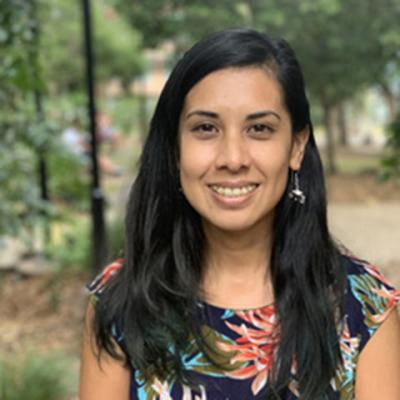
Studying in the Masters of Peace and Conflict Studies program at UQ will be an opportunity to strengthen my knowledge and skills for promoting equitable citizenship and community development in the context of cultural diversity.
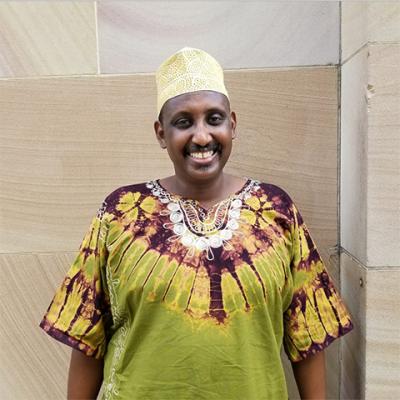
I plan to use the knowledge I have gained to help stop violence at the source. I believe this program gave me the special skills, knowledge and experience to become an all-round peacemaker both at the local and international level.
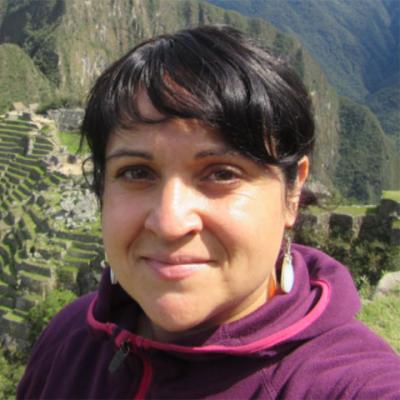
I’m extremely grateful to Rotary and The University of Queensland to have this opportunity to process and unpack my experiences, learn how to more effectively address causes of conflict and oppression, and continue working towards navigating cultural difference to create a more just and equitable world.

The program's niche focus on peace and conflict studies is very relevant in the current political context. Being an international student from India I have found that UQ is a gateway for academic enrichment and has a beautiful campus.
The Master in Peace and Conflict had the best range of subjects that fitted my interests. There was a great international focus to the material and there is a wide range of ‘out of the box’ subjects that you don’t find in other degrees.
Studying in the Masters of Peace and Conflict Studies program at UQ will be an opportunity to strengthen my knowledge and skills for promoting equitable citizenship and community development in the context of cultural diversity.
I plan to use the knowledge I have gained to help stop violence at the source. I believe this program gave me the special skills, knowledge and experience to become an all-round peacemaker both at the local and international level.
I’m extremely grateful to Rotary and The University of Queensland to have this opportunity to process and unpack my experiences, learn how to more effectively address causes of conflict and oppression, and continue working towards navigating cultural difference to create a more just and equitable world.
The program's niche focus on peace and conflict studies is very relevant in the current political context. Being an international student from India I have found that UQ is a gateway for academic enrichment and has a beautiful campus.
Events
See all events
Stories
See all stories
UQ people
Meet the CEO championing neurodiversity in the workplace
4-minute read

Careers
Emerging careers in the arts and communication industries
5-minute read

Stories
See all stories
UQ people
How a UQ scholarship helped Paul pursue his dream
5-minute read
UQ people
Meet the CEO championing neurodiversity in the workplace
4-minute read
Careers
Emerging careers in the arts and communication industries
5-minute read
Entry requirements
Entry requirements
It's possible to complete this degree in 2 years, 1.5 years or 1 year depending on your qualifications and experience.
You can apply for any duration as long as you meet the entry requirements. You may also be eligible to apply for credit or exemptions to shorten your degree further. You'll graduate with the same qualification no matter how long you take to complete the degree.
2-year degree (32 units of study)
To be eligible to complete the degree in 2 years full-time (or part-time equivalent)full-time (only available as full-time study), you'll need:
- a bachelor's degree (or equivalent) in any discipline, or
- to have successfully completed 3 years of study towards an approved qualification at an overseas partner institution that has a formal pathway to the Master of Peace and Conflict Studies (2-years duration).
You must have a grade point average (GPA) of 5.0 on a 7-point scale in your previous qualification.
1.5-year degree (24 units of study)
If you have relevant prior learning or experience, you can reduce the number of courses you need to complete and graduate in less time.
To be eligible to complete the degree in 1.5 years full-time (or part-time equivalent)full-time (only available as full-time study), you'll need:
- a bachelor's degree (or equivalent) in a relevant discipline (see below), with a GPA of 5.0, or
- a bachelor's degree (or equivalent) in any discipline, plus the Graduate Certificate in Peace and Conflict Studies from UQ or the Graduate Certificate in Mediation and Conflict Resolution from UQ, with a GPA of 4.0, or
- a bachelor's degree (or equivalent) in any discipline with a GPA of 5.0, plus 3 years full-time equivalent, relevant work experience (see below) with documented evidence (such as references).
The listed grade point averages (GPAs) are on a 7-point scale.
Applications based on work experience will be individually assessed.
1-year degree (16 units of study)
If you have relevant prior learning or experience, you can reduce the number of courses you need to complete and graduate in less time.
To be eligible to complete the degree in 1 year full-time (or part-time equivalent)full-time (only available as full-time study), you'll need:
- a bachelor honours degree (or equivalent)* in a relevant discipline (see below) with a GPA of 5.0, or
- a bachelor's degree (or equivalent) in a relevant discipline, plus the Graduate Certificate in Peace and Conflict Studies from UQ, with a GPA of 4.0.
The listed grade point averages (GPAs) are on a 7-point scale.
*You must have completed a substantial research project in your Honours degree equivalent to at least one semester of full-time study (or part-time equivalent).
Relevant disciplines for previous qualifications
Relevant disciplines include degrees with a sequence of study in peace and conflict studies, international relations, political science, sociology, cultural studies, history, economics/political economy, anthropology or ethnography, or law.
You must have completed at least a major, a field of study, or approximately 30% of program content in the discipline, including a mix of introductory and advanced courses.
Relevant work experience
Relevant work experience, which should be supported with evidence (see below), may be paid or voluntary and includes:
- work in a relevant peace and conflict organisation including community organisations, non-governmental organisations, government agencies, or other cognate organisations, that may include work experience in planning, research, management, implementation or evaluation of domestic or international peacebuilding, mediation, conflict resolution, transitional justice and cognate efforts to manage conflict or facilitate peace, and
- a demonstration of computer literacy, research and writing skills, and the ability to work collaboratively.
Evidence of relevant work experience should include a letter from your employer (and/or previous employers) stating the following:
- That you work (or worked) within the specified organisation
- The nature of your work, including any relevant duties and responsibilities.
- The length of time that you worked there (i.e. 3 years)
- Whether your employment was full-time, part-time* or casual*.
*if you worked part-time or casual, please list the average number of hours worked per week.
Related programs
Depending on your previous qualifications and current goals, you might want to consider
one of these related programs:
English language requirements
IELTS overall 6.5; reading 6; writing 6; speaking 6; listening 6. For other English Language Proficiency Tests and Scores approved for UQ
TOEFL iBT (including Paper Edition) - Overall 87, listening 19, reading 19, writing 21 and speaking 19.
PTE Academic - Overall Score of 64 and 60 in all sub bands.
BE - A minimum overall grade of 4 plus a minimum grade of C in all macro skills.
CES - Overall 176 and 169 in all sub bands.
OET is not accepted.
There are other ways to meet the English language requirements. For some programs, additional conditions apply.
Student visas
International students who are accepted into full-time study in the Master of Peace and Conflict Studies are eligible to apply for an Australian student visa (subclass 500).
There are a number of requirements you must satisfy before a visa is granted, including the Genuine Student (GS) requirement.
Fees and Scholarships
Indicative annual fee
Approximate yearly cost of tuition (16 units). Your fees will vary according to your study load. Fees are reviewed each year and may increase.
$31,200
2026
Fee information for 2027 is not yet available. Fee information displayed is for 2026.
Approximate yearly cost of full-time tuition (16 units). Your fees will vary according to your study load. Fees are reviewed each year and may increase.
AUD $48,080
2027
Government assistance
Financial aid
As an international student, you might be eligible for financial aid – either from your home country, or from the Australian Government.
FEE-HELP
Domestic students who are accepted into the Master of Peace and Conflict Studies pay tuition fees.
FEE-HELP is an Australian Government loan scheme to assist eligible students with the cost of their tuition fees.
Centrelink support
The Australian Government offers a number of income-support payments to eligible Australian university students.
Scholarships
You may be eligible for more than 100 scholarships, including:
How to apply
Applying online
All international applications should be submitted to UQ. If you prefer, you can use an approved UQ agent near you.
The program code for the Master of Peace and Conflict Studies is 5646.
This program is available in multiple durations. You can apply for any duration as long as you meet the entry requirements.
When you apply, select your preferred duration. If you don't meet the requirements for your first preference, we'll automatically consider you for entry into a longer duration.
Applying online
All domestic applications should be submitted to UQ.
The program code for the Master of Peace and Conflict Studies is 5646.
This program is available in multiple durations. You can apply for any duration as long as you meet the entry requirements.
When you apply, select your preferred duration. You can also ask us to consider you for a longer duration if you don't meet the entry requirements for your first preference.
Important dates
The closing date for this program is:
- To commence study in semester 2 - May 31 of the year of commencement.
- To commence study in semester 1 - November 30 of the previous year.
Visa processing times vary. Apply and accept your offer as early as you can.
To learn more about UQ dates, including semester start dates, view the Academic Calendar.
Important dates
The closing date for this program is:
- To commence study in Semester 1 - January 31 of the year of commencement.
- To commence study in Semester 2 - June 30 of the year of commencement.
To learn more about UQ dates, including semester start dates, view the Academic Calendar.
Aboriginal and Torres Strait Islander applicants
For support with applying – or if you have any questions about university life – get in touch with our Aboriginal and Torres Strait Islander Studies (ATSIS) Unit.
Explore other programs
Helpful advice, right when you need it
Get useful info to help you navigate the confusing parts of getting into uni. Scholarship reminders, access to events and experiences, and advice from real students.
Sign up for updates. (No spam! We promise.)