

Understand the complex relationship between mind, body and disease.
Gain a broad foundation in biology, chemistry and mathematics, and their role in modern medicine.
Examine current techniques to diagnose disease, evaluate the effectiveness of treatment, and to research the causes and cures of disease.
Expand your knowledge of:
- anatomy
- developmental biology
- human genetics
- immunology
- infectious diseases
- neuroscience
- pharmacology
- physiology.
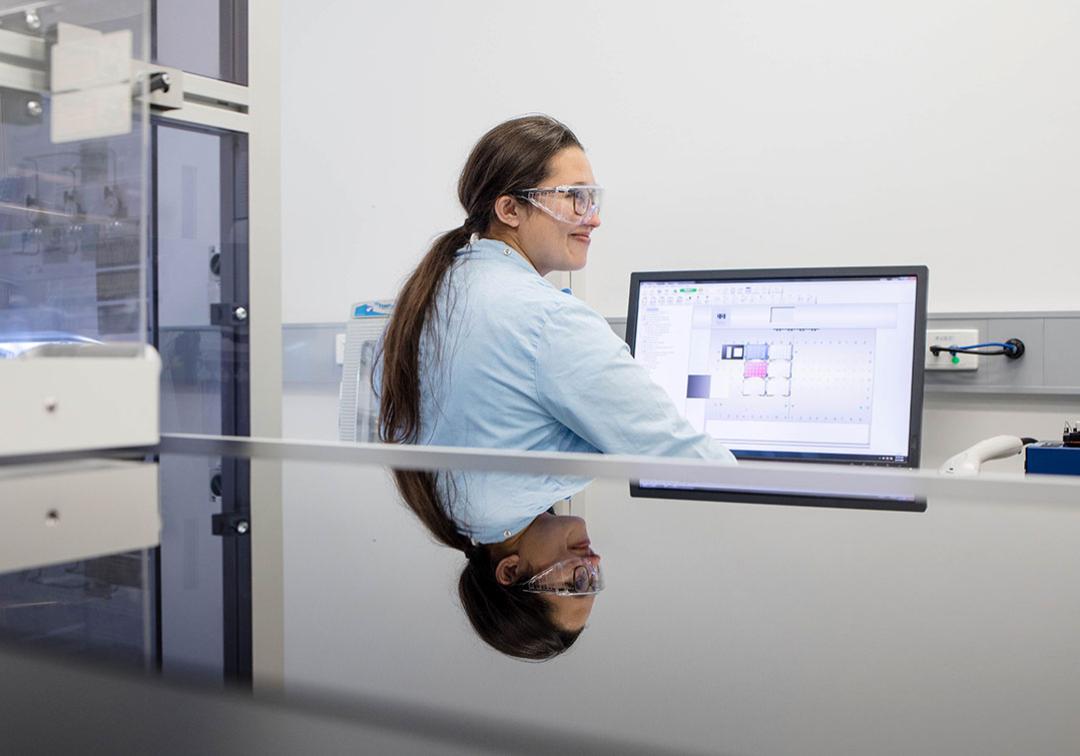
Practical sessions will refine your laboratory skills, and you'll learn to conduct medical research trials and test the effectiveness of treatments.
Work alongside researchers and healthcare professionals in research placements at the forefront of biomedical breakthroughs.

Career possibilities
Our programs prepare you for your first job and beyond. Here are some of the careers you could be on your way to:
- Biomedical researcher
- Embryologist
- Biomedical engineer
- Biomedical technology scientist
- Clinical trials research assistant
- Biomedical scientist
- IVF scientist
- Biomedical imaging manager
- Medical laboratory scientist
- Biomedical technician
Average annual salary range
Embryologist
seek.com.au
Average annual salary range
Research Analyst
seek.com.au
Next steps after graduation
You’ll graduate with the core knowledge, practical skills and technical expertise required to embark on a career in biomedical science.
Expect to find work in a range of fields, including:
- hospital and clinical diagnostics
- biotechnology and pharmaceuticals industries
- laboratory-based molecular and cellular biology
- health policy and communication
- secondary or tertiary teaching, when combined with a teaching qualification.
A major in Biomedical Science is an established pathway for graduate entry to the Doctor of Medicine and other health programs.

I was equipped with the most recent content knowledge by my world-class teachers, and the research experiences involved in my program enabled me to become a confident idea creator and synthesiser.
I was equipped with the most recent content knowledge by my world-class teachers, and the research experiences involved in my program enabled me to become a confident idea creator and synthesiser.
Events
See all events
Stories
See all stories
Uni life
What's it really like to study science at UQ?
9-minute read

Study tips
UQ science scholarships to help fund your studies
8-minute read
Stories
See all storiesUni life
What's it really like to study science at UQ?
9-minute read
Study tips
UQ science scholarships to help fund your studies
8-minute read
This Major is available as:
- Major
- Extended Major
How you'll learn
Your learning experiences are designed to best suit the learning outcomes of the courses you choose.
- Lectures
- Tutorials
- Work placements
- Research experience
- Laboratory work
What you'll study
At UQ, subjects are called 'courses'. Here's a sample of the courses you could study:
- Human Anatomy
- Systems Physiology
- Integrative Cell and Tissue Biology
- Principles of Pharmacology
Helpful advice, right when you need it
Get useful info to help you navigate the confusing parts of getting into uni. Scholarship reminders, access to events and experiences, and advice from real students.
Sign up for updates. (No spam! We promise.)